
Tia Tackles
Wegovy for women: How it works, why results differ, and what women need to know

GLP-1 medications are reshaping how the medical community thinks about weight, metabolism, and chronic disease. Wegovy - the semaglutide-based injection and pill approved specifically for weight management - is one of the most studied drugs in this class. But a closer look at the data reveals something the headlines often miss: Wegovy doesn’t work the same way in women as it does in men.
Women tend to lose more weight on semaglutide. Women also face a distinct set of considerations - from how the medication interacts with hormonal health and the menstrual cycle, to what it means for fertility, contraception, and life stages like PCOS, perimenopause, and menopause.
What is Wegovy, and how does it work?
Wegovy is a prescription medication approved by the FDA for chronic weight management in adults. Its active ingredient is semaglutide - the same molecule used in Ozempic for type 2 diabetes, at a higher dose and with a different approved indication.
Semaglutide belongs to a drug class called GLP-1 receptor agonists. GLP-1 (glucagon-like peptide-1) is a hormone naturally produced in the gut after eating. It signals fullness to the brain, slows gastric emptying, and improves how the body manages blood sugar. Wegovy mimics this hormone and sustains its effects well beyond what the body would produce on its own.
The practical outcome is a significant reduction in hunger and appetite — and, for many people, a reduction in what’s been coined “food noise”: the persistent mental preoccupation with food, cravings, and eating that makes sustained dietary change so difficult. This isn’t a behavioral fix. It’s a physiological one.
Wegovy works upstream of willpower — at the hormonal level where hunger is actually generated.
Why women consider Wegovy
Weight management is rarely straightforward for women, and the reasons are largely biological. Hormonal fluctuations across the menstrual cycle affect hunger, cravings, and energy expenditure. Conditions like PCOS and hypothyroidism - which disproportionately affect women - create insulin resistance that makes standard caloric approaches insufficient. The hormonal shifts of perimenopause and menopause redistribute fat, slow metabolism, and worsen insulin sensitivity in ways that often feel sudden and disconnected from lifestyle. And for many women, decades of weight cycling, restrictive dieting, or being told to simply “eat less and move more” have produced frustration, not results.
Wegovy addresses a different layer of the problem. Rather than imposing behavioral change through restriction, it works at the hormonal level - reducing the physiological drive to overeat and improving metabolic function in ways that make sustained weight management more achievable. For women whose weight challenges are rooted in insulin resistance, hormonal dysregulation, or a metabolism altered by life transitions, this mechanism represents a meaningful shift in what’s available.
Deciding whether Wegovy is appropriate, however, requires more than checking a BMI threshold. It requires understanding the full picture: root causes of weight changes, existing metabolic and hormonal conditions, cardiovascular risk, life stage, and long-term goals. That evaluation is where medically supervised care makes the difference.
Wegovy is one component of Tia’s Metabolic Health & Weight Loss Program - a women’s-specific program designed to identify the root causes of weight and metabolic changes, screen for insulin resistance and related conditions, and build a personalized, evidence-based plan that may include GLP-1 medications like Wegovy when clinically appropriate. The program includes a comprehensive metabolic assessment, ongoing medical monitoring, and long-term follow-up - not a one-time prescription.
Available in-person in San Francisco, Los Angeles, and Scottsdale, and virtually across California, Arizona, New York, Massachusetts, New Jersey, and Connecticut.
How is Wegovy taken? Injection vs pill
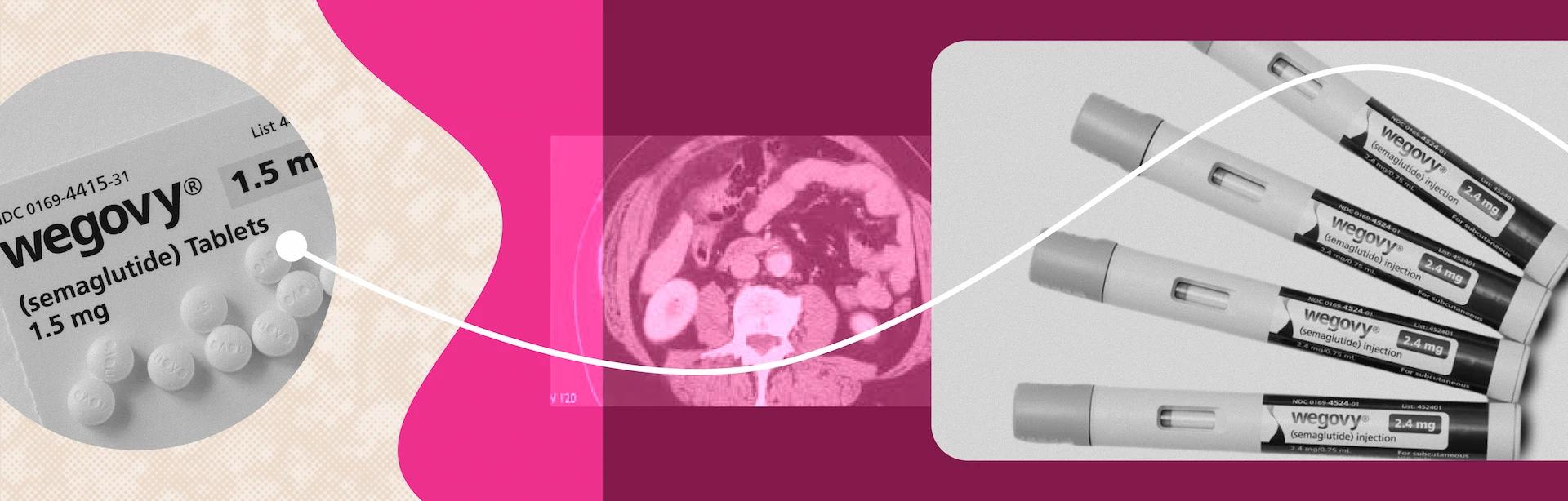
Wegovy is currently available in two forms, and understanding the difference matters when considering whether it’s the right fit.
The Wegovy injection has been FDA-approved since 2021. It is administered once weekly as a subcutaneous injection - under the skin of the abdomen, thigh, or upper arm - using a small pre-filled pen. The weekly schedule makes adherence straightforward for most people, and the injection is generally well-tolerated once the titration period is complete.
The Wegovy pill (oral semaglutide 25 mg) was FDA-approved in December 2025, making it the first oral GLP-1 medication ever approved for weight loss. It is taken once daily, at least 30 minutes before the first meal or drink of the day, with no more than 4 oz of plain water. In clinical trials, the pill produced an average weight loss of 16.6% — comparable to the injection.
Quick comparison:
- Injection: Once weekly · FDA-approved 2021 · Most long-term data · Max dose 2.4 mg
- Pill: Once daily · FDA-approved December 2025 · ~16.6% average weight loss in trials · No needles required
Both forms require a prescription.
Wegovy results across different life stages
One of the more significant findings for women is that Wegovy’s effectiveness doesn’t decline with age or hormonal stage. A 2025 pooled analysis showed meaningful weight loss across all menopause stages:
- Pre-menopausal women: 18.2% average weight loss
- Peri-menopausal women: 15.0% average weight loss
- Post-menopausal women: 15.7% average weight loss
The hormonal changes of perimenopause — declining estrogen, increasing insulin resistance, redistribution of fat toward the abdomen — are often precisely what makes weight management feel impossible during midlife. Wegovy’s mechanism addresses these metabolic drivers directly, which may help explain why results remain strong even after menopause.
It's essential to determine whether you have actually entered perimenopause or menopause, as symptoms can overlap with other conditions. Tia's Perimenopause/Menopause Assessment is the best place to start.
Possible Wegovy benefits for women
Weight loss is one outcome of Wegovy. But for women, the implications extend into multiple intersecting areas of health - many of which are undertreated and poorly addressed by standard weight management approaches.
1. PCOS and insulin resistance
Polycystic ovary syndrome (PCOS) affects an estimated 7–10% of women of reproductive age, making it the most common hormonal disorder in this population. Insulin resistance is central to the condition — driving irregular cycles, elevated androgens, stubborn weight gain, and increased long-term risk of type 2 diabetes and cardiovascular disease.
Wegovy’s mechanism directly targets insulin resistance, and the downstream effects can be substantial. Research shows that losing just 5–10% of body weight can lower androgen levels, regulate menstrual cycles, and restore ovulation in women with PCOS. In one clinical study, nearly 80% of women with PCOS on semaglutide lost at least 5% of body weight, with corresponding improvements in blood sugar control and cycle regularity.
A separate randomized trial found that combining semaglutide with metformin outperformed metformin alone — producing greater weight loss, improved insulin sensitivity, better cycle regularity, and higher rates of natural pregnancy.
Note: Wegovy is not FDA-approved specifically for PCOS, but it can be prescribed off-label for women who meet the weight-related eligibility criteria.
2. Cardiovascular protection
In March 2024, Wegovy became the first weight loss medication ever approved by the FDA to reduce cardiovascular risk. In the SELECT trial — which followed over 17,600 people across several years — semaglutide reduced the risk of heart attack, stroke, or cardiovascular death by 20% in adults with existing heart disease and obesity or overweight.
Importantly, a significant portion of this cardiovascular benefit appears to occur independently of weight loss — suggesting that semaglutide has direct protective effects on the cardiovascular system beyond fat reduction alone. For postmenopausal women, who face sharply elevated cardiac risk as estrogen declines, this distinction is clinically meaningful.
3. Fatty liver disease
In 2025, Wegovy received an additional FDA approval for the treatment of noncirrhotic metabolic dysfunction-associated steatohepatitis (MASH) — a serious form of fatty liver disease driven by insulin resistance. Fatty liver is more prevalent among women in perimenopause and menopause, as metabolic shifts increase visceral fat accumulation. Wegovy’s approval in this indication extends its clinical utility well beyond weight management.
4. Brain health and cognition
Emerging research suggests GLP-1 receptor agonists may have neuroprotective properties. Early studies indicate a potential role in slowing cognitive decline in Alzheimer’s and Parkinson’s disease. The biological connection between metabolic health and cognitive function is well-established, and semaglutide’s impact on insulin sensitivity and inflammation may contribute to these effects. This area of research is still developing, but the early signals are compelling.
5. Perimenopause and menopause
The metabolic disruption of the menopause transition— worsening insulin resistance, increased visceral adiposity, destabilized blood sugar — is frequently undertreated. Lifestyle interventions alone are often insufficient. The 2025 pooled analysis confirming that semaglutide produces meaningful weight loss across all menopause stages is significant: it means Wegovy’s effectiveness is not compromised by the hormonal changes that typically make weight management harder during this period.
6. Fertility
Losing 5–10% of body weight can restore regular ovulation in women whose cycles have been disrupted by obesity-related hormonal imbalance or PCOS. This is the mechanism behind the widely reported “Ozempic baby” phenomenon — unexpected pregnancies among women on GLP-1 medications. Wegovy does not act as a fertility drug, but by improving the metabolic conditions required for consistent ovulation, it can indirectly restore fertility.
According to research from UT Southwestern, 44% of women on semaglutide in the SELECT trial lost more than 10% of body weight within two years — a threshold shown to meaningfully improve ovulatory function. Women not intending to conceive should be aware of this effect when making contraception decisions.
7. Appetite, cravings, and emotional eating
Women disproportionately report emotional eating, stress-driven food seeking, and cyclical cravings that intensify around menstruation, perimenopause, and periods of elevated cortisol. Wegovy acts on the brain’s satiety centers in ways that reduce not just hunger, but the compulsive pull toward food as a coping mechanism. Clinical reports consistently describe a reduction in food preoccupation that dietary interventions alone rarely achieve.
8. Migraine relief: a promising emerging benefit
Migraine affects women at roughly three times the rate of men — and it is one of the most undertreated conditions in women’s health. A growing body of research now suggests that GLP-1 medications including Wegovy may offer meaningful relief for chronic migraine sufferers, through mechanisms that appear to be independent of weight loss.
The strongest signal to date comes from a large real-world study of approximately 22,000 people with chronic migraine, presented at the American Academy of Neurology Annual Meeting in March 2026. Researchers found that those who started GLP-1 drugs were 10% less likely to visit the emergency department and 14% less likely to be hospitalized over the following year, compared to those starting topiramate - a standard preventive migraine medication.
Earlier clinical data points to a plausible mechanism. A 2025 pilot study published in Headache: The Journal of Head and Face Pain found that liraglutide - a GLP-1 closely related to semaglutide - reduced average monthly migraine days from 19.8 to 10.7 in patients with chronic migraine unresponsive to at least two prior preventive treatments.
Wegovy is not FDA-approved for migraine, and controlled trials specifically on semaglutide are still needed. But for women managing chronic migraine alongside obesity or metabolic conditions, this is a clinically meaningful overlap worth raising with a provider.
Flexible in-person or virtual care
Get care that moves at your speed and works with your schedule with same or next-day appointments.
Online and in-person appointment available in Los Angeles, San Francisco, New York, and Scottsdale
Wegovy side effects in women
Gastrointestinal effects
The most common side effects of Wegovy are gastrointestinal: nausea, diarrhea, constipation, bloating, and reduced appetite. These are most pronounced during dose escalation and typically diminish as the body adjusts. The gradual titration schedule — starting at 0.25 mg and increasing over 16 weeks — is designed specifically to minimize this.
Strategies that reduce GI side effects:
- Taking the weekly injection in the evening so peak nausea occurs during sleep
- Eating smaller, lower-fat meals during the titration period
- Avoiding high-fat, fried, or heavily seasoned foods which worsen nausea
- Maintaining consistent hydration to prevent compounding issues
Women experience more nausea than men
Clinical trial data shows that nausea and vomiting are reported at higher rates in women than men on semaglutide. Women with a history of motion sickness, pregnancy-related nausea, or gastrointestinal sensitivity may want to flag this with a provider before initiating treatment — not to avoid Wegovy, but to have a management plan in place from the outset.
Hair loss and shedding
Hair loss is one of the most searched Wegovy side effects online - and one of the most misunderstood. The clinical reality is more reassuring than the conversation suggests.
First, the numbers: in Wegovy’s own clinical trials, hair loss was reported in 3% of adults taking Wegovy, compared to 1% taking placebo. That is a real signal, but it means the vast majority of people on Wegovy — 97% — do not experience it. It is not a common side effect by clinical definition, and it is not permanent.
When it does occur, the mechanism is well understood. It is telogen effluvium - a temporary disruption of the hair growth cycle triggered by the physiological stress of rapid weight loss, identical to what occurs after childbirth, major surgery, or crash dieting. The medication itself is not attacking hair follicles. The shedding typically begins two to four months after significant weight loss starts and resolves within six to twelve months once weight stabilizes. It is diffuse and across the scalp, not patterned.
Women appear to be more susceptible than men. A 2025 preprint study analyzing over 3,000 patients found that women on semaglutide had more than twice the risk of hair loss compared to women on an alternative weight loss medication, while the signal in men was not statistically significant.
Nutritional factors significantly influence severity. The most effective mitigation strategies are:
- Maintaining adequate protein intake — a minimum of 70–100g per day
- Testing for and correcting deficiencies in iron, zinc, biotin, and vitamin D
- Prioritizing gradual weight loss over maximum speed, which reduces physiological stress
Wegovy & oral contraceptive absorption
One of the most clinically important and underreported interactions of Wegovy for women is its effect on oral contraceptive pill (OCP) absorption. Because semaglutide slows gastric emptying, it can impair how completely OCPs are absorbed, potentially reducing their contraceptive efficacy. This is most relevant:
- During the first 4 weeks after initiating Wegovy
- For 4 weeks following each dose increase
Non-oral contraceptive methods — including IUDs, implants, patches, vaginal rings, and barrier methods — are not affected by this interaction. Wegovy’s FDA label advises discontinuing the medication at least two months before attempting to conceive. Women on OCPs who are starting Wegovy should discuss contraception management with their provider before initiation.
Wegovy use during pregnancy
Wegovy is not recommended during pregnancy. Animal studies have raised concerns about fetal development, and human safety data remains insufficient to establish a risk-free profile. Novo Nordisk has established a pregnancy registry for Wegovy to collect real-world safety data, though results have not yet been published. Current clinical guidance recommends:
- Discontinuing Wegovy at least 2 months before attempting conception to allow full clearance
- Continuing reliable contraception until actively trying to conceive, given that weight loss may restore ovulation unexpectedly
- Stopping the medication immediately and consulting a provider upon confirmed pregnancy
- For women with PCOS planning pregnancy, coordinating a transition plan with both gynecology and endocrinology before stopping Wegovy
Wegovy and breastfeeding
No human safety data exists for semaglutide use during breastfeeding. Out of caution, Wegovy is not recommended while nursing. Providers can advise on alternative weight management approaches compatible with lactation.
The bottom line
Wegovy is one of the most well-studied medications in the history of obesity treatment. For women specifically, the evidence is clear and compelling: semaglutide produces meaningful, sustained weight loss — and women consistently see stronger results than men.
But the more complete picture is richer than the weight loss headline. For women managing PCOS, navigating perimenopause, carrying cardiovascular risk, or dealing with chronic migraine, or dealing with the metabolic consequences of hormonal change, Wegovy addresses biology that has historically been underdiscussed and undertreated. It is not a cure and it is not appropriate for everyone — but when prescribed thoughtfully as part of a comprehensive approach to women’s metabolic health, it is a tool with substantial potential.
Getting that evaluation right requires a provider who understands the full picture: the hormonal drivers, the life stage, the metabolic history, and the long-term goals — not just a BMI number. That is the difference between a prescription and a plan.
The right next step is a dedicated metabolic health assessment — a conversation that goes beyond the scale to examine root causes, screen for underlying conditions, and determine whether Wegovy or another GLP-1 is clinically appropriate.
Tia’s Metabolic Health & Weight Loss Program is built specifically for this evaluation: a women’s-focused program that includes comprehensive metabolic screening, hormonal assessment, and medically supervised access to GLP-1 medications when clinically indicated — with ongoing monitoring and long-term follow-up, not a one-time prescription. Available in-person in San Francisco, Los Angeles, and Scottsdale, and virtually across California, Arizona, New York, Massachusetts, New Jersey, and Connecticut. Schedule a Metabolic Health Assessment at Tia.
Flexible in-person or virtual care
Get care that moves at your speed and works with your schedule with same or next-day appointments.
Online and in-person appointment available in Los Angeles, San Francisco, New York, and Scottsdale
Frequently asked questions about Wegovy for women
Does Wegovy work better for women than men?
Clinical data consistently shows women lose more weight on semaglutide than men. Women typically achieve 9.6–12.6% body weight reduction compared to 7.2–10.2% in men across the same studies. In the STEP 1 trial, the overall average was 15% over 68 weeks. Women also maintain strong responses across all menopause stages, including postmenopause.
How much weight do women lose on Wegovy?
In the STEP 1 trial, participants lost an average of 15% of starting body weight over 68 weeks. Nearly two-thirds lost 10% or more. Individual results depend on starting weight, dose tolerance, lifestyle factors, and how the body responds. Real-world data from over 9,900 patients showed an average of 14.1% weight loss at one year - consistent with trial findings.
Is Wegovy the same as Ozempic?
Both contain semaglutide, but they are not interchangeable. Ozempic is FDA-approved for type 2 diabetes management, with a maximum dose of 2.0 mg. Wegovy is approved for chronic weight management and cardiovascular risk reduction, with a maximum dose of 2.4 mg. Studies show that the higher maintenance dose in Wegovy produces meaningfully greater weight loss. The two medications are prescribed for different indications and typically covered differently by insurance.
How does Wegovy compare to Zepbound for women?
Both are effective GLP-1 medications, but in the SURMOUNT-5 head-to-head trial (2025), Zepbound (tirzepatide) produced approximately 47% more weight loss than Wegovy. This difference is attributed to tirzepatide’s dual receptor mechanism (GIP and GLP-1 vs. GLP-1 only). Wegovy, however, has a longer clinical track record, more published long-term safety data, and the unique cardiovascular risk reduction approval. The decision between the two should be made with a provider based on individual health history, goals, and tolerability.
Does Wegovy help with PCOS?
Wegovy is not FDA-approved for PCOS, but it is commonly prescribed off-label for women with PCOS who meet the weight eligibility criteria. The weight loss and insulin-sensitizing effects of semaglutide directly address core PCOS drivers. Research demonstrates that losing 5–10% of body weight through Wegovy can regulate menstrual cycles, reduce androgen levels, and improve metabolic markers in women with PCOS.
Does Wegovy affect menstrual cycles or hormones?
Wegovy does not directly alter hormone levels, but weight loss does — and meaningfully so. In women whose cycles have been disrupted by obesity-related hormonal imbalance or PCOS, significant weight loss often restores more regular ovulation. Women not intending to conceive should ensure contraceptive coverage is reliable and up to date, as restored ovulation may occur unexpectedly during treatment.
Does Wegovy interact with oral contraceptives?
Yes. Because Wegovy slows gastric emptying, it can reduce the absorption of oral contraceptive pills, particularly during the first 4 weeks of starting the medication and for 4 weeks after each dose increase. During these periods, it is advisable to use a non-oral contraceptive method or add a barrier method. IUDs, implants, patches, and rings are not affected by this interaction.
Does Wegovy work after menopause?
Yes. 2025 data shows postmenopausal women lost an average of 15.7% of body weight on semaglutide — results comparable to pre- and peri-menopausal women. The cardiovascular benefit of Wegovy is also particularly relevant postmenopause, given the elevated cardiac risk associated with estrogen decline.
Does Wegovy come as a pill or an injection?
Both forms are currently available. The Wegovy injection — a once-weekly subcutaneous pen — has been FDA-approved since 2021 and carries the most extensive clinical data. The Wegovy pill (oral semaglutide 25 mg, taken once daily) was FDA-approved in December 2025 — the first oral GLP-1 approved for weight loss. In clinical trials, the pill delivered 16.6% average weight loss, comparable to injection results. Both require a prescription and follow similar titration principles.
Is the Wegovy pill as effective as the injection?
Clinical trial data for the oral semaglutide 25 mg pill showed 16.6% average weight loss — broadly comparable to the injection. An indirect comparison by Novo Nordisk found key outcomes were similar between the two formulations. The pill offers a needle-free alternative for those who prefer oral administration, though it requires stricter adherence to morning dosing conditions (at least 30 minutes before food or drink other than plain water).
Does Wegovy work differently in women?
The short answer is yes - and the data is consistent enough to be clinically meaningful.
Research shows that women tend to lose more weight on semaglutide than men. A major analysis of trial data found that women lost an average of 9.6–12.6% of body weight on Wegovy, compared to 7.2–10.2% in men across the same studies.
In the pivotal STEP 1 trial — the largest dedicated Wegovy weight loss study — participants lost an average of 15% of body weight over 68 weeks. Nearly two-thirds of participants lost 10% or more.
The reasons behind this sex difference aren’t fully understood, but likely relate to baseline hormonal profiles, the interaction between semaglutide and estrogen-related metabolic pathways, and the higher prevalence of insulin-resistance-driven weight gain in women — conditions that GLP-1 mechanisms are particularly well-suited to address.