
Tia Tackles
Zepbound for Women: Weight Loss, Hormones, and Hidden Considerations

Tia
GLP-1 receptor agonists, the class of medications that includes semaglutide (Ozempic/Wegovy) and tirzepatide (Mounjaro/Zepbound) have become some of the most talked-about drugs in modern medicine. While the conversation tends to center on weight loss, there's a much bigger story unfolding. For women in particular, these medications interact with hormonal health, metabolism, and chronic disease risk in ways that go far beyond the number on a scale.
What Exactly Is Zepbound?
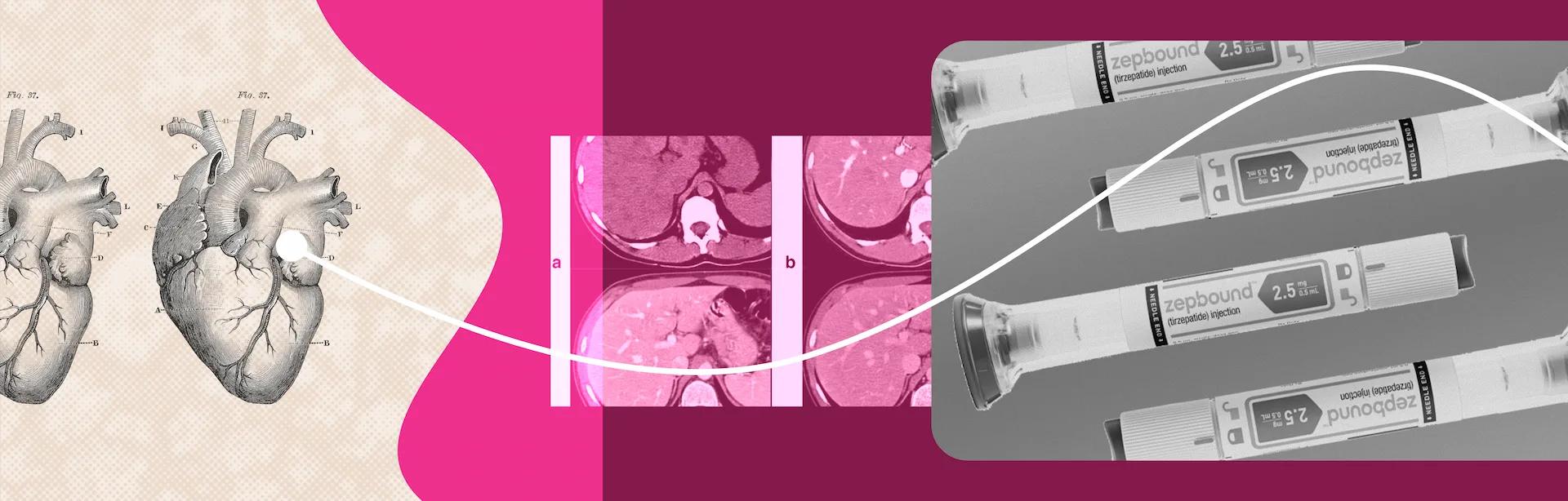
Zepbound (tirzepatide) is a once-weekly injectable prescription medication approved by the FDA for chronic weight management. It's made by Eli Lilly, the same company behind Mounjaro, which uses the identical active ingredient to treat type 2 diabetes.
What makes Zepbound different from other weight loss medications like Wegovy, is that it works on two hormone receptors at once: GIP and GLP-1. Both are naturally occurring gut hormones that tell your brain you're full, slow digestion, and improve how your body handles blood sugar. By hitting both pathways, Zepbound is more potent than single-receptor medications like semaglutide.
Think of it this way: where Wegovy has one key, Zepbound has two and it unlocks more doors.
In the largest head-to-head trial ever conducted between the two medications (source: SURMOUNT-5), Zepbound outperformed Wegovy on every weight loss measure.
How Does Zepbound Work?
You know that feeling of fullness after a satisfying meal - where food just doesn’t sound appealing anymore? Zepbound mimics the hormones responsible for that signal, and sustains it. It also acts on areas of the brain involved in food cravings, which is why so many patients describe a dramatic reduction in what’s become known as “food noise” — the constant mental chatter about food, snacks, and cravings that many people live with daily.
This isn't willpower. It's biology.
What Kind of Results Are We Talking About?
The clinical data is genuinely remarkable. In the SURMOUNT-1 trial — the landmark study of Zepbound in adults without diabetes — participants lost an average of:
- 15% of body weight on 5 mg (~34 lbs)
- 19.5% of body weight on 10 mg (~44 lbs)
- 20.9% of body weight on 15 mg (~48 lbs)
- 3.1% on placebo (with diet and exercise)
At the highest dose, 91% of participants achieved weight loss of 5% or more — which is the threshold at which meaningful health benefits begin. In real-world data tracking over 4,000 tirzepatide users (75.6% of whom were women), patients lost an average of 12.9% of their body weight within just 6 months.
Women tend to lose more weight on Zepbound than men. Across four major SURMOUNT trials analyzing nearly 3,000 women and 1,700 men, women lost -11.5% to -27.6% of body weight compared to -8.8% to -18.9% in men. In SURMOUNT-3, women were also significantly more likely to hit the 5% and 10% weight loss marks.
Stopping Zepbound
This is important to understand for prospective users, Zepbound is a long-term medication, not a quick fix. The SURMOUNT-4 trial showed that participants who stopped tirzepatide after reaching their goals regained about 14% of their body weight within the following year. Those who stayed on it lost an additional 5.5%. Treating obesity like the chronic condition it is, rather than something you "cure", is the mindset shift this medication calls for.
Zepbound at a Glance
Zepbound (tirzepatide) is a once-weekly injectable medication for chronic weight management that activates two metabolic hormone receptors, GLP-1 and GIP, helping reduce appetite, slow digestion, and improve blood sugar control.
Clinical trials show 15–21% average body weight loss, with many patients experiencing reduced cravings and “food noise.” Because obesity is a chronic condition, Zepbound is typically intended for long-term treatment, not short-term use.
Why Zepbound Is Especially Relevant for Women
This is where the conversation gets really interesting. Zepbound doesn't just reduce the number on the scale — it addresses several underlying mechanisms that are uniquely relevant to women's hormonal health.
1. PCOS & Insulin Resistance
For women with polycystic ovary syndrome (PCOS), insulin resistance is often at the root of everything: irregular cycles, fertility struggles, excess androgens, and metabolic dysfunction. Zepbound improves insulin sensitivity and reduces fasting insulin levels — directly targeting that root cause.
Research suggests that GLP-1 medications can restore ovulatory cycles in women with PCOS, lower testosterone and androgen levels (reducing symptoms like acne and unwanted hair growth), and improve long-term metabolic and cardiovascular risk. Several fertility specialists are now integrating GLP-1s into preconception protocols for select patients.
Note: Zepbound is not FDA-approved to treat PCOS but its mechanism directly addresses its core drivers.
2. Heart Health
GLP-1 medications lower inflammation, improve blood vessel function, and reduce the risk of cardiovascular events and much of this happens independently of weight loss. For postmenopausal women, who face sharply elevated cardiac risk, this is significant. The cardiovascular data on tirzepatide is among the most compelling in recent obesity medicine research, particularly for reducing heart attack and stroke risk.
3. Fatty Liver Disease
Many women - including those at a healthy weight - unknowingly have non-alcoholic fatty liver disease (NAFLD), which is driven by insulin resistance. GLP-1s have been shown to reduce liver fat and improve liver enzymes. During perimenopause and menopause, when metabolism often shifts and visceral fat accumulates, this benefit can be particularly protective.
4. Brain Health & Cognition
Emerging research suggests GLP-1s may have neuroprotective properties — some studies show slowed cognitive decline in patients with Alzheimer's or Parkinson's. The link between metabolic health and brain health is becoming increasingly clear, and GLP-1s are right at the center of that conversation. More research is needed, but the early signals are genuinely exciting.
5. Perimenopause & Menopause
The hormonal shifts of perimenopause worsen insulin resistance, increase visceral fat, and destabilize blood sugar — often in ways that feel completely out of a woman's control. Zepbound can help regulate these metabolic changes, supporting steadier energy, mood, and appetite control during this transition.
A 2025 retrospective study from Mayo Clinic found that postmenopausal women using hormone therapy (HRT) alongside tirzepatide experienced greater weight loss and better cardiometabolic outcomes than those on tirzepatide alone — suggesting the two therapies may actually work better together.
6. Fertility
Losing 5–10% of body weight can restore regular ovulation in women with PCOS or obesity-related cycle disruption. This is why so many women have reported unexpected pregnancies on GLP-1 medications not because the drug is a fertility treatment, but because it's restoring the metabolic conditions your body needs to ovulate consistently.
If you're not trying to conceive, keep reading as taking Zepbound has real implications for your birth control choices.
7. Appetite Regulation & Cravings
Zepbound impacts the brain's satiety centers, helping curb sugar cravings and emotional eating. Many patients describe a new sense of freedom around food — not from white-knuckling it, but from biology working in their favor. This isn't about restriction. It's about realignment.
Zeppound Side Effects in Women
The Most Common Ones
The most frequently reported side effects are gastrointestinal, and they tend to peak during dose increases then settle down. They include nausea, diarrhea, constipation, stomach discomfort, and reduced appetite. This is exactly why Zepbound starts at a low dose (2.5 mg) and slowly increases over time — giving your body space to adjust.
Practical tips that help:
- Take your weekly injection before bed so peak nausea happens while you're asleep
- Eat smaller, blander meals during the first few weeks
- Avoid high-fat or greasy foods, which worsen nausea
- Stay well hydrated — especially important for preventing kidney-related issues
Women Experience More Nausea Than Men
Across clinical trials, nausea and vomiting were reported more frequently in women. If you have a sensitive stomach or a history of nausea (motion sickness, pregnancy nausea), let your provider know before starting so they can have a management plan ready.
Hair Thinning: Why It Happens and What to Do
This is one of the most common concerns women bring up, and it's worth addressing clearly. In Zepbound clinical trials, hair thinning was reported in 4–5% of users overall — but in 7.1% of women versus less than 1% of men.
The cause is not the drug itself attacking your hair follicles. It's a well-known condition called telogen effluvium — a temporary shedding response triggered by the physical stress of rapid weight loss. It's the same thing that causes postpartum hair loss. Hair typically regrows fully within 6–12 months once weight stabilizes.
To minimize the risk:
- Eat at least 70–100g of protein per day to support hair and muscle
- Ask your provider to check iron, zinc, biotin, and vitamin D levels
- Aim for steady weight loss — not the fastest possible pace
Serious but Rare Risks
Zepbound carries a boxed warning for a rare thyroid cancer called medullary thyroid carcinoma (MTC), based on animal studies. Do not take Zepbound if you or a family member has ever had MTC or a condition called MEN 2. Other rare risks include pancreatitis and gallbladder disease — your provider will screen for risk factors before prescribing.
Common Side Effects
Most Zepbound side effects are gastrointestinal and tend to occur during dose increases. The most common include nausea, diarrhea, constipation, stomach discomfort, and reduced appetite.
Some women may also experience temporary hair thinning during rapid weight loss. Rare but serious risks include pancreatitis, gallbladder disease, and medullary thyroid carcinoma (MTC) in people with certain genetic conditions.
Fertility, Pregnancy & Birth Control and Zepbound: Critical Information
Your Birth Control May Be Less Effective
This is one of the most important things to know before starting Zepbound. Because the medication slows stomach emptying, it can reduce how well oral contraceptive pills are absorbed — potentially making them less effective. This is most relevant:
- During the first 4 weeks of starting Zepbound
- For 4 weeks after each dose increase
The FDA label for tirzepatide specifically recommends switching to a non-oral contraceptive method (IUD, implant, patch, ring, or condoms) or adding a backup barrier method during those windows. Non-oral methods are not affected by this interaction.
Talk to your Tia provider about contraception before starting Zepbound.
Thinking About Getting Pregnant?
Zepbound is not recommended during pregnancy. Animal studies have shown potential fetal risks, and there is not yet enough human data to establish safety. Here's what current guidance says:
- Stop Zepbound at least 1–2 months before trying to conceive to allow the medication to fully clear your system
- Use reliable contraception until you are actively trying — weight loss may restore fertility unexpectedly
- If you become pregnant while on Zepbound, stop immediately and contact your provider
If you have PCOS and are using Zepbound while planning to conceive, work with your gynecologist and endocrinologist together on a transition plan
Breastfeeding
There is currently no human data on tirzepatide and breastfeeding. Out of caution, it is not recommended while nursing. Talk with your provider about alternative options.
How Zepbound Dosing Works
Zepbound is a once-weekly self-injection under the skin (typically the abdomen, thigh, or upper arm). Your dose starts low and gradually increases — this isn't about a slow build to results, it's about giving your body time to adjust and minimize side effects.
- Weeks 1–4: 2.5 mg (starter dose)
- Weeks 5–8: 5 mg
- Every 4 weeks after: increase by 2.5 mg as tolerated, up to a max of 15 mg
Most people don't need to reach 15 mg. The right dose is the lowest one that works for you — balancing results with tolerability. You'll typically start noticing changes within the first few weeks, but the most significant results build over 6–18 months of consistent use.
Tips for Women Getting the Most Out of Zepbound
- Protein first: Aim for 70–100g of protein daily. This preserves lean muscle while you're losing fat — a critical distinction that affects how you look and feel, not just what the scale says.
- Resistance training: Even 2–3 sessions per week of strength work significantly reduces the lean muscle loss that can come with rapid weight loss.
- Don't skip meals: Even if you're not hungry, your body needs fuel. Undereating can accelerate hair loss, nutrient deficiencies, and muscle loss.
- Manage side effects proactively: Don't wait until nausea is unbearable — there are dietary adjustments and medications that can help. Ask your provider before stopping the medication.
- Think long-term: Zepbound works best as one piece of a metabolic health plan — not a standalone solution. Pair it with nutrition support, movement, and regular monitoring.
The Takeaway
Zepbound is not a “magic shot,” and it’s not right for everyone. But when prescribed thoughtfully — alongside lifestyle and hormonal support — it can be genuinely transformative. As clinicians who approach health through the lens of root cause and whole-woman care, we see GLP-1s as tools with profound potential: to restore balance, prevent chronic disease, and support women through every hormonal transition.
The data consistently shows that women respond to Zepbound at least as well as men — and often better. Its dual mechanism addresses the hormonal and metabolic drivers of weight gain that are uniquely relevant to women's health: PCOS, insulin resistance, perimenopause, fertility, and beyond.
Wondering If Zepbound Is Right for You?
Weight management is deeply connected to hormones, metabolism, and overall health. A Tia provider can help you understand whether medications like Zepbound fit into your broader care plan and discuss safe, personalized options based on your goals and medical history.